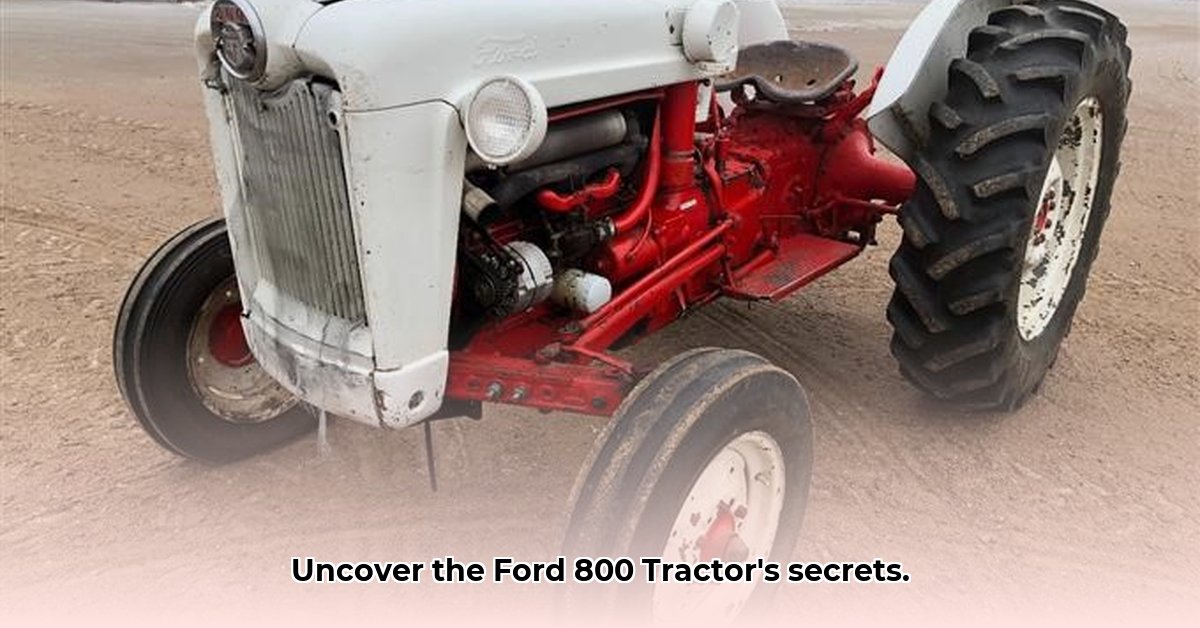
Ford Tractor 800: A Piece of Farming History
The Ford 800 series tractors, produced between 1954 and 1957, represent a pivotal moment in post-war agricultural advancement. Models like the 820, 850, 860, and their slightly upgraded 801 counterparts, were workhorses renowned for their robust build and straightforward design. Their simplicity, a stark contrast to modern machinery, made them surprisingly easy to maintain and repair, fostering a lasting connection between farmer and machine. These tractors became symbols of dependability, readily tackling a multitude of farm tasks. For more on Ford tractor specs, check out this helpful resource: Ford tractor specs.
Under the hood resided a four-cylinder engine, fueled by either gasoline or liquid propane gas (LP gas). While horsepower figures vary slightly depending on the measurement method (belt vs. drawbar), estimates typically range from 35 to 40 horsepower. The 850 model, for instance, boasted a 14-gallon fuel tank, a five-speed transmission (non-synchronized), and a substantial weight ranging from 2850 to 3400 pounds, highlighting their robust construction. But what was the on-the-ground experience like?
The Ford 800 series possessed both strengths and limitations. Its hydraulic system, with a modest 2-gallon capacity, wasn't designed for every task; using larger implements might have tested its limits. Comfort was also a trade-off. The open operator station meant exposure to the elements – blazing summer heat or biting winter cold. While power steering was an available option, the overall experience reflected the technology of its time, prioritizing reliable, steady performance over speed or sophisticated features.
Today, the Ford 800 series holds considerable appeal among collectors and vintage equipment enthusiasts. Their durable construction and relatively simple mechanics make them rewarding restoration projects, though the process demands patience and resourcefulness. For many, these tractors represent more than just machinery; they are tangible links to a bygone era, embodying nostalgia and a connection with simpler times.
How to Restore a Ford 800 Series Tractor
Restoring a Ford 800 tractor is a rewarding but challenging undertaking. The following steps provide a structured approach:
1. Thorough Inspection: Begin with a meticulous examination of the tractor's entire structure. Assess the engine, hydraulics, electrical systems, and tires, documenting the condition of each component to inform your restoration strategy.
2. Parts Acquisition: Sourcing parts is a crucial stage. Online forums dedicated to vintage tractors, specialized parts suppliers, and even salvage yards can yield invaluable components. Patience and resourcefulness are vital, as some parts may be scarce.
3. Mechanical Restoration: Depending on the tractor's condition, this could involve engine overhauls, hydraulic repairs, and electrical system upgrades. Detailed repair manuals are essential, and seeking guidance from knowledgeable mechanics experienced with Ford 800s can prove invaluable.
4. Cosmetic Refurbishment: This final phase focuses on the tractor's aesthetics. Cleaning, repainting, and restoring the original finish will breathe new life into its appearance.
Assessing Your Ford 800 Engine: A Critical First Step
Before beginning a Ford 800 engine restoration, a detailed assessment is paramount. Is the engine seized? What is the state of internal components? A seized engine presents a considerably greater challenge than one simply requiring a rebuild. This initial evaluation will determine your approach and inform your resource allocation. Will the restoration focus on complete originality, or will functionality be the primary goal? This decision significantly impacts parts sourcing and your overall timeline.
Disassembly, Cleaning, and Parts Sourcing
Following the initial assessment, carefully disassemble the engine, meticulously documenting each step with photographs or detailed notes. Thoroughly clean all components using appropriate solvents and tools, paying close attention to detail; even small particles can lead to future complications.
Sourcing parts for a vintage Ford 800 demands persistence. Online forums, specialized suppliers, and possibly even scrapyards, represent viable sources. Prioritize essential components initially; cosmetic restoration can be addressed later.
Key Takeaways:
- Restoring a Ford 800 requires a methodical approach, combining mechanical skills with effective parts sourcing.
- A comprehensive initial assessment is crucial to successfully determine the extent of necessary repairs.
- Sourcing authentic components can be challenging; planning and resourcefulness are key.
- Budgetary constraints must be considered throughout the process.
- The restoration itself is time-consuming and demands patience, dedication and careful planning.
Ford 800 Advantages and Disadvantages
| Advantages | Disadvantages |
|---|---|
| Relatively simple mechanics, easier to maintain | Parts can be difficult to find |
| Sturdy, reliable construction | Limited power and hydraulic capabilities |
| Highly collectible and nostalgic appeal | Lacks modern safety and comfort amenities |
The Ford 800 series, while lacking the power and advanced features of modern tractors, maintains its enduring legacy as a dependable workhorse and a highly sought-after piece of agricultural history. Its simple design, rugged build quality, and nostalgic appeal ensure its continued relevance among collectors and enthusiasts alike.